1347 stories
·
0 followers

Do trans people have Second Amendment rights? Wyoming says maybe not.

1 Comment and 3 Shares

Skip to the content

Jurisprudence
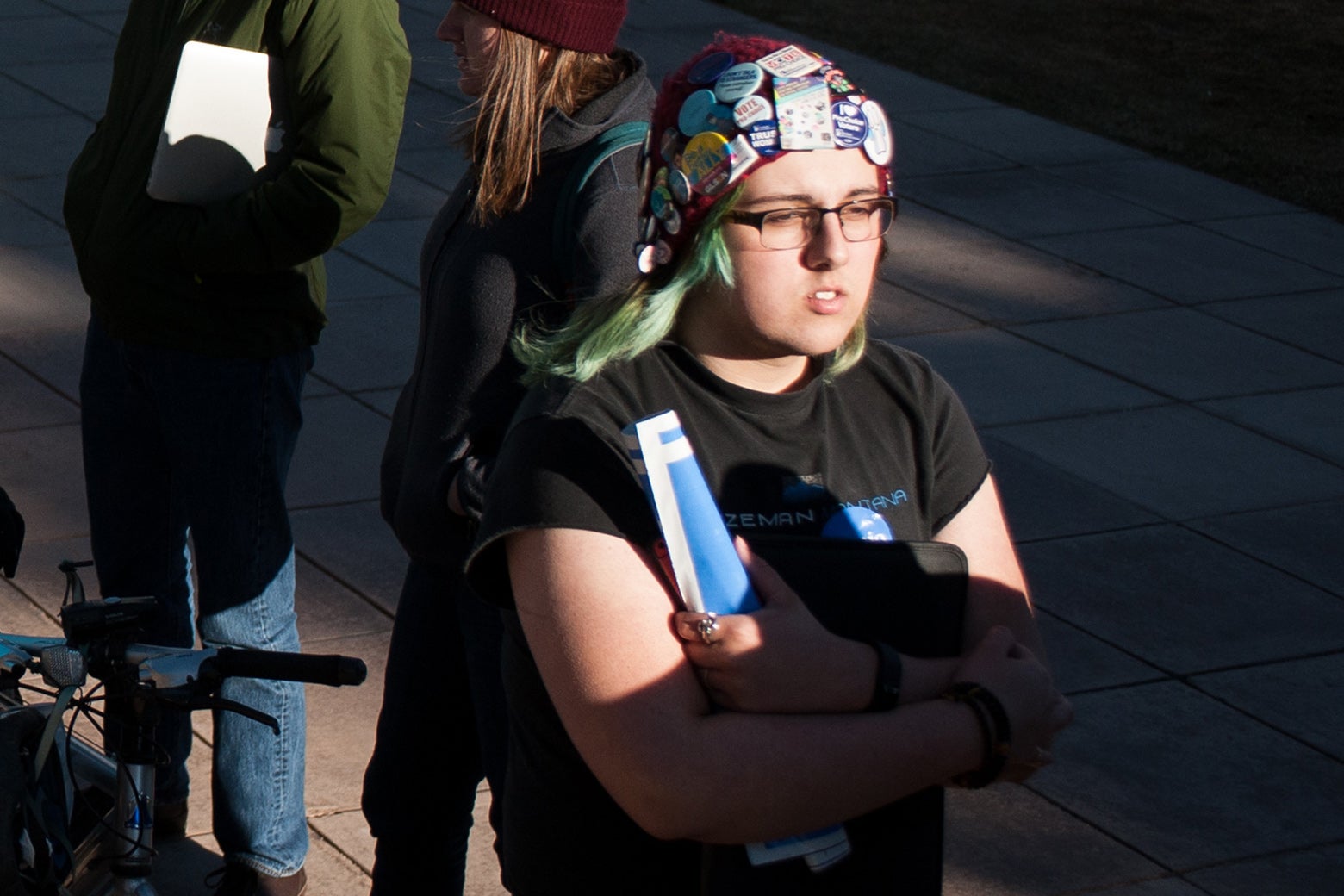
A young person with green-streaked hair, glasses, and a black t-shirt stands outside on a paved walkway while holding rolled-up papers and a tablet tightly to their chest. They are wearing a dark knit beanie covered in numerous political and social activism buttons, while other partially visible pedestrians and a bicycle stand in the background.

Last September, Ríhanna Kelver was standing outside the Crowbar & Grill in Laramie, Wyoming, preparing to start her bartending shift, when she noticed a group of men across the street. One of them was shouting in her direction, and Kelver heard several homophobic and transphobic slurs as he began approaching her. Moments later, according to court testimony and surveillance footage, the man shoved Kelver to the ground hard enough to injure her tailbone.

Kelver responded by drawing a pistol from her bag, chambering a round, and pointing the weapon at the man who had pushed her. She kept the safety on and never fired. The man and his companions retreated.

Today, Kelver, a 28-year-old trans woman, faces two felony charges—aggravated assault and possession of a deadly weapon with unlawful intent—that could carry up to 15 years in prison. The man who shoved Kelver and who allegedly initiated the confrontation, known only as “S. Durham,” has not been charged.

According to Wyoming Statute Section 6-2-602, people who are lawfully present do not have to try to retreat before using force to protect themselves from imminent death or serious bodily harm. This “stand your ground” law echoes statutes in 29 other states: They remove the duty to retreat, allowing a person to use defensive force as long as they are not the initial aggressor. Kelver’s attorney argues that she acted squarely within state law. The aggravated assault statute under which she was charged exempts situations in which displaying a firearm is “reasonably necessary” for self-defense. Video evidence confirms that Kelver was alone, outnumbered, physically assaulted, and left on the ground facing multiple aggressors.

But Albany County Circuit Court Judge Robert Sanford, who presided over Kelver’s pretrial hearing, agreed with the prosecutor that there was probable cause that she committed the crimes with which she was charged. Kelver must now argue her case in court, risking up to 15 years in prison if she cannot convince a jury that she was acting reasonably in self-defense. Cases like Kelver’s expose key contradictions at the heart of our cherished rhetoric of armed self-defense. The legal right to defend oneself has always proved far more fragile when exercised by the very people who most need protection.

For generations, our nation’s reigning political culture has celebrated armed self-defense as a fundamental right. In recent years, many states—with the blessing of the Supreme Court—have moved aggressively to expand “gun rights,” eliminating permit requirements, loosening restrictions on firearm carry, and framing armed self-defense as an essential expression of individual liberty and good citizenship. Wyoming has joined that movement, passing its “stand your ground” law in 2018 and adopting “constitutional” (aka permitless) carry in 2021.

In many ways, Kelver’s case echoes another one involving a person shoving another to the ground, and the latter brandishing a firearm. In July 2018, 28-year-old Markeis McGlockton took his young son into a Clearwater, Florida, convenience store to purchase snacks. His girlfriend, Britany Jacobs, idled their car in a disabled parking spot, accompanied by the couple’s other child. Upon hearing a commotion outside, McGlockton left the store to see 47-year-old Michael Drejka arguing heatedly with Jacobs. Fearing for his family’s safety, McGlockton shoved Drejka to the ground, and the latter pulled out his handgun.

McGlockton started backing away, but, unlike in Kelver’s case, Drejka fired his gun, striking McGlockton in the chest.

Markeis McGlockton died in front of his family, and Drejka—a white man—claimed that he had acted in self-defense, and that he was in “fear for his life” from the larger, younger Black man. The sheriff did not charge Drejka initially because of Florida’s “stand your ground” statute, which protects an individual’s right to use deadly force if they reasonably believe that their life is in danger.

The case pitted McGlockton’s right to defend his family from a threatening stranger against Drejka’s right to initiate a confrontation over a parking spot and to mete out justice according to his own whim. Due in large part to the release of video footage showing McGlockton starting to back away, Drejka was eventually charged with manslaughter. He was found guilty the year following the incident and is serving a 20-year sentence.

Unlike Drejka, Kelver did not fire her gun, nor did she initiate the confrontation, yet she was not given the benefit of the doubt by local authorities.

Kelver’s experience also fits a long and troubling history of transgender people being punished for their acts of survival. In 2011, Cece McDonald, a Black trans woman in Minnesota, defended herself with a pair of scissors during a racist and transphobic attack. One of her assailants died in the altercation that he initiated. Although evidence indicated that McDonald had been attacked first, she ultimately accepted a plea deal and served 19 months in a men’s prison.

In the same year, Ky Peterson, a young Black trans man in Georgia, shot and killed his rapist. Peterson was sentenced to 20 years and served nine. In each case, the legal system could not recognize the urgent need for protection experienced by people disproportionately targeted for harassment and violence. It is for this reason that transgender people who survive violence often find themselves transformed from victims into suspects—especially if they are nonwhite and/or low-income. Our legal system seems well prepared to scrutinize and punish their acts of self-preservation instead of examining the circumstances that made those acts necessary.

This dynamic is especially striking in Kelver’s case because it collides with another deeply American mythology: that the Second Amendment operates as a universal guarantee for everyone.

Gun rights advocates often describe firearms as the “great equalizer”: A firearm allows a smaller person to defend themselves against a larger attacker; it protects vulnerable individuals who cannot rely on immediate police intervention; it gives ordinary people the means to survive dangerous encounters.

If we accept the great-equalizer premise, then Kelver appears to be a textbook example of the iconic armed citizen endowed with Second Amendment rights. She is a well-trained and responsible gun owner. According to the Laramie Reporter, she was carrying a pistol because she had previously experienced threats from a patron where she worked.* On the night in question, she was physically assaulted by a large man and outnumbered by his companions. And unlike Michael Drejka, she brandished her gun without discharging it. By all accounts, Kelver’s perception of threat was reasonable, which—by Wyoming law—should exempt her from criminal prosecution.

The logic deployed against Kelver is ultimately about much more than her individual claim to “keep and bear” arms for her self-defense. It is about the ways our legal system creates categories of people whose claims to self-defense are treated as ephemeral. Once we decide that some citizens must clear a higher bar before they are permitted to protect themselves, rights stop functioning as rights. They become permissions granted or withheld based on the whims of those who interpret and adjudicate our laws.

Historically, that logic has never remained confined to a single group. Black and Indigenous Americans, labor organizers, immigrants, queer people, political dissidents, abuse survivors, and countless others have discovered that rights celebrated in the abstract can evaporate when exercised against the wrong forces.

At this moment, these forces include a federal government that has turned increasingly against its people while vitiating the rule of law, labeling everyone who resists “violent secular political groups whose ideology is anti-American, radically pro-transgender, and anarchist.”

In this light, the questions raised by Kelver’s case stretch beyond whether she should ultimately prevail at trial.

It is whether we all genuinely possess a right to stand up and defend ourselves from injustice and violence, or whether this right inheres only in certain kinds of people, the ones favored by those in power.

Update, June 5, 2026: This article has been updated to attribute reporting.

Correction, June 9, 2026: This post initially misstated that Kelver had been threatened by a co-worker.

Read the whole story
Share this story
Delete

GM Updates 250,000 EVs with Vehicle-to-Grid Firmware, Announces Grid-Scale Sodium-Ion Batteries

1 Share
"Battery breakthroughs will lessen AI's demand on the electricity grid," argues The Washington Post's editoral board, arguing that GM's latest moves "offer a fresh reminder that resource constraints can be solved by innovation." Or As Fortune put it, "America's electric grid is buckling under extreme weather, aging infrastructure, and an AI build-out that is quietly rewriting U.S. power demand — and General Motors wants to turn that crisis into a business." They describe GM's plan as offering itself "as a distributed utility in disguise... stitching together hundreds of thousands of battery-powered cars, new grid-scale storage, and a unified charging platform into what amounts to a virtual fleet of power plants." The bet puts GM on a collision course with Ford's newly branded Ford Energy unit as both Detroit rivals race to repurpose underused EV capacity for a more urgent problem: keeping the lights on in the AI era. GM's case rests on three planks. The first is its existing fleet. GM says more than 250,000 of its EVs on U.S. roads can already charge bidirectionally — pulling electricity from the grid and sending it back. "Every evening, a quiet transformation occurs across the American landscape," GM Energy vice president Wade Sheffer writes in an open letter to utilities and regulators, describing the EVs sitting in driveways as "a massive opportunity to aggregate energy storage capacity." A firmware update is rolling out to customers with GM Energy's vehicle-to-home hardware, converting those systems into full vehicle-to-grid assets with no new hardware and turning home backup systems into grid resources when utilities need them. GM is piloting the idea in Michigan with DTE Energy at 30 employee homes, and has sketched a 2030 vision with Pacific Gas & Electric in which more than 52,000 GM EVs help balance the grid out of a projected 130,000 vehicles in the area. GM is also "seeking partnerships with utility companies nationwide to assist in offering such vehicle-to-grid services for customers," reports CNBC, noting it's one of two moves "meant to address concerns about rising energy costs amid an artificial intelligence boom." Forbes reports that GM's second goal "is to leapfrog the dominant battery cell tech used for energy storage packs right now" — right past the LFP (lithium-iron phosphate) stage, "which is dominated by China." Sodium batteries are cheaper to use than LFP because they don't need an additional cooling system. They also have a 20-year usable life and are made from materials that can be sourced from within the U.S., the company said at a briefing in San Francisco on Tuesday. "Sodium-ion actually is the better chemistry for that application. And when I say sodium-ion is better, I mean GM's version of sodium-ion," Kurt Kelty, GM's battery chief and a long-time Tesla battery executive, told Forbes. He said GM is seeing great results from its prototypes, even at scorching temperatures of 55 Celsius (131 Fahrenheit). "Sodium-ion-powered energy storage systems have the potential to operate without active cooling and with much less system complexity," Kurt Kelty, GM's vice president of battery and sustainability, said Tuesday in a blog post. "In large energy storage systems, that matters." Not having to cool the battery cells could lead to lower upfront costs as well as operating costs, the automaker said. TechCrunch reports on GM's big new partnership with energy-storage startup Peak Energy to develop GM's sodium-ion battery chemistry for grid-scale deployments: GM wouldn't share with TechCrunch how much money it is investing in this energy-storage effort. But we do know the company has committed $900 million to commercialize new battery chemistries, an investment that includes a new battery-development center. .. The first GM cells are expected to enter trial production at the company's Battery Cell Development Center in 2028. "Our next-generation sodium-ion cell development will drive energy density higher," promises GM's blog post, arguing they're extending the company's battery expertise and technical infrastructure "into the electrical grid itself. If we get this right, we will not just build better batteries. We will help create a more resilient, more affordable and more flexible energy future... Every improvement we make strengthens the development stack that supports both EVs and energy storage." "The message: GM isn't just selling cars into a stressed grid; it's supplying the batteries to stabilize it," argues Fortune. And GM also announced they're augmenting their apps with an "Energy Pass" offering "seamless access to Tesla Supercharger, IONNA, Electrify America, and soon, ChargePoint and EVgo networks." Their goal is to simplify the charging experience with an app "that covers nearly 70% of all DC fast chargers in the United States, plus many Level 2 chargers, all through one app."

Read more of this story at Slashdot.

Read the whole story
Share this story
Delete

A report on the benefits of AI was reportedly full of AI hallucinations

1 Share
KPMG published a paper about the benefits of AI last year. An investigation found that it was full of AI hallucinations.

Read the whole story
Share this story
Delete

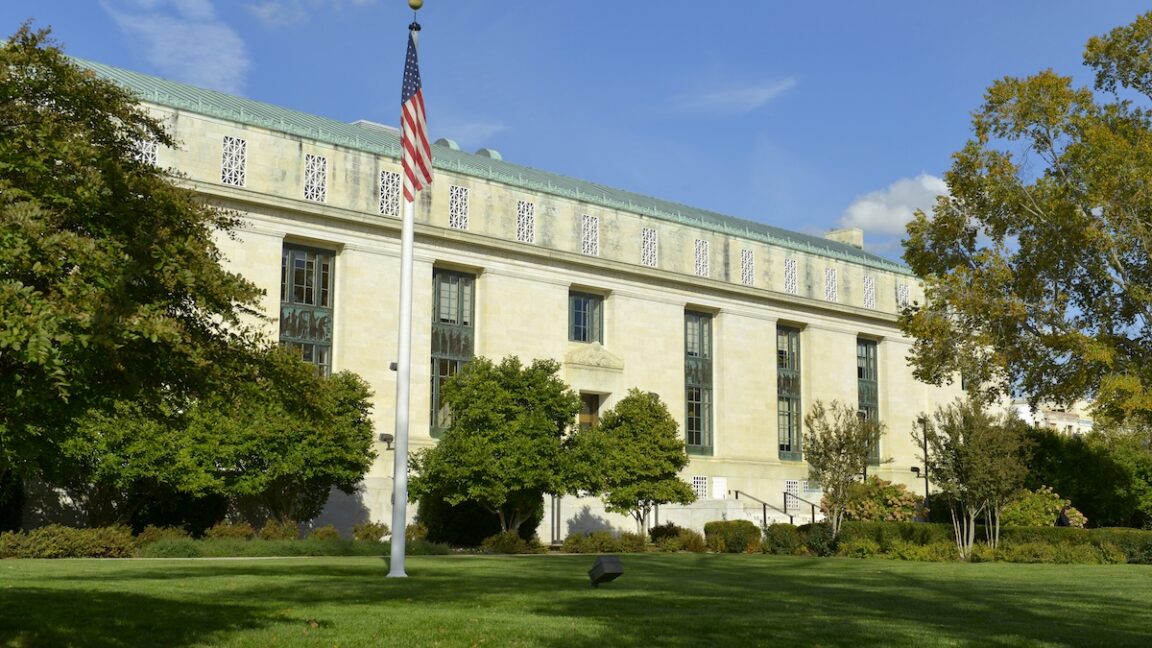
Have politics finally come for the National Academies of Science?

1 Share

Founded during the US Civil War to provide advice to the government, the National Academies of Science have become one of the most prestigious scientific organizations. Its primary function is to prepare comprehensive reports on scientific and technological issues, aided by its ability to attract top talent from across the country.

Those reports have not been afraid to weigh in on matters of public controversy and risk offending powerful groups, which it has managed to do without losing the respect of the governmental organizations that fund these reports. But this year, there have been increasing signs that the Academies' ability to dodge political firestorms has reached its limit. Yesterday, a deeply reported story from Politico explained the breakdown between the National Academies and Republican politicians.

The National Academies is preparing an expert report on attribution of weather events to human-driven climate change, and fossil fuel companies are worried it will lead to findings of liability in the many cases where those companies are being sued.

A fight over climate

In public, the National Academies has been very circumspect in its approach to the overt hostility toward science displayed by the Trump administration. The organization's president, Marcia McNutt, almost completely ignored the attacks in her annual "state of the science" address last year, and repeated that approach in this year's. But that hasn't helped the organization stay out of Republican crosshairs.

The problem, apparently, was projects that were started during previous administrations. One of these was the production of the fourth edition of the Reference Manual on Scientific Evidence. This was prepared for the Federal Judicial Center to help judges determine how to handle scientific issues that come before the courts.

The fourth edition was the first to contain a chapter on climate change, but a group of Republican state attorneys general had issues with it. The chapter included information from people who had been involved in litigation over climate damages; rather than seeing that as a sign of expertise, the AGs viewed it as a form of bias. Also an issue: the chapter treated human-driven climate change as established science (which it is), which was termed a failure to be impartial.

The state attorneys general demanded that the Federal Judicial Center pull the chapter, and it immediately caved. But the National Academies had already placed the original, intact report on its website. When the state attorneys general demanded that it follow the Judicial Center's lead, it declined.

At that point, Republicans in Congress stepped in. A group of 11 representatives sent a letter to the head of the Office of Management and Budget in which they "respectfully urged" the office's director to "investigate whether NASEM should be suspended or debarred from all
federal funding under your jurisdiction." Again, the issue is that they feel there should be some sort of affirmative action for the views of people who refuse to accept the evidence for human-driven climate change: "Most shocking is that there was no fully independent, meaningful peer review from scientists with differing views on climate science."

Similarly, members of Congress threatened to investigate the National Academies when it organized an updated climate report at the same time as the Department of Energy had brought together a group of fringe contrarians to produce something that said that all those carbon emissions are probably fine.

The fight over attribution

Why is there so much fuss about scientific advice to judges? The Politico piece puts it into context and suggests that things are likely to get worse.

The issue is one of attribution: Can we detect the cause of climate change in individual weather events? A few decades ago, that simply wasn't possible. But researchers have since developed tools that allow them to determine the probability that different events would occur with and without the influence of our greenhouse gas emissions. And so it has become clear that some of the most extreme events simply wouldn't have occurred without the warming we've driven.

That clarity has allowed other researchers to tie the financial damages from catastrophic weather events to the influence of fossil fuels produced by individual companies. If those studies are widely accepted as valid scientific work, then judges will be compelled to admit them as evidence in any lawsuits against said companies.

There have been a number of lawsuits filed against fossil fuel companies, but most have not succeeded because judges have decided that they impinged on policies that needed to be set on the federal level. But things like economic damages have long been considered the domain of the courts, and a direct connection between business practices and damage caused by a storm may be a harder accusation to dodge.

Those instances are where the National Academies come in again, as a committee it formed during the Biden administration is in the process of evaluating the scientific standing of attribution studies. The oil companies are concerned enough that, as the Politico article details, they've hired third parties to file for access to the emails of committee members who work at public universities.

All of which suggests that the fight over this report is going to get intense, and both the credibility and funding of the National Academies is likely to come under sustained assault, which may permanently damage science-based policy in the US. And that would provide yet another demonstration that, when even basic facts can become politicized, trying to avoid becoming a target by saying "we're just focused on the science" will not be a successful strategy.

Read full article

Comments


Read the whole story
Share this story
Delete

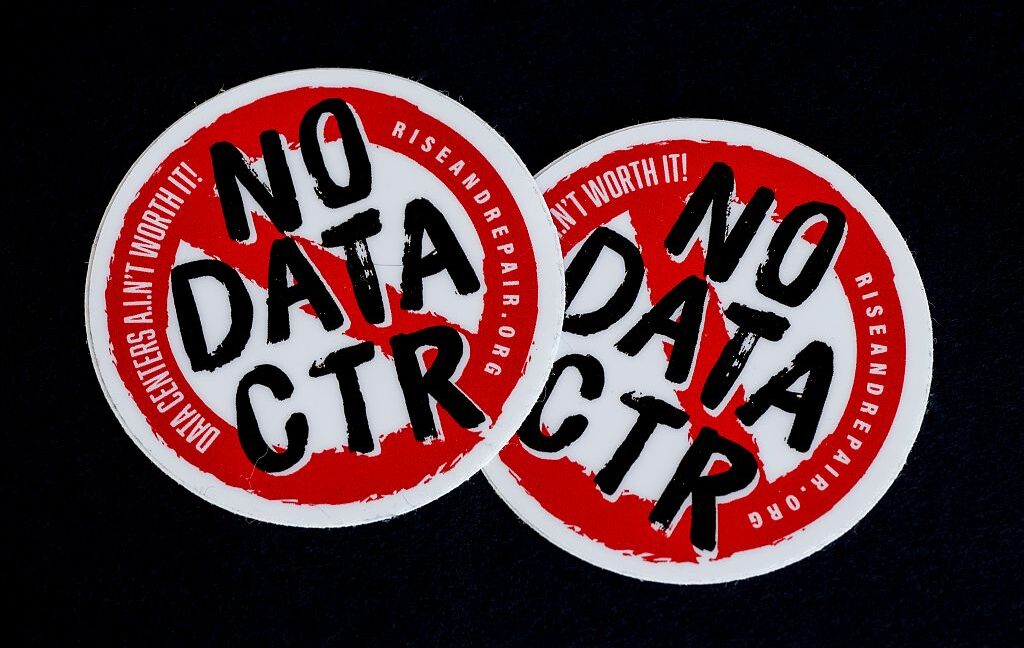
$130 billion in data center projects blocked by protests so far this year

1 Share

It's clear that communities now have an effective playbook to block data center construction. This week, researchers flagged the first quarter of 2026 as producing the "most blocked and delayed data center projects on record," NBC News reported.

Data Center Watch, a project from AI intelligence firm 10a Labs that tracks data center fights around the US, reported that protestors "blocked or delayed at least 75 projects nationwide worth about $130 billion from January through March," NBC News reported.

That's "the most in a three-month period since the group began tracking in 2023," and it shouldn't be parsed as "a cyclical spike," the researchers said. Instead, there's been a "structural shift," as "communities have internalized an opposition playbook, legislative sessions introduced formal regulatory uncertainty, and the number of active opposition groups more than doubled to 833 across 49 states," researchers said.

The political momentum behind data center protests is expected to influence the upcoming midterm elections, with both parties increasingly sympathizing with resistance as opposition intensifies.

Sociologist's unique take on data center opposition

Sociologist Tressie McMillan Cottom has been spending time with organizers in North Carolina to better understand the playbook that's fueling this momentum. In an op-ed for the New York Times encouraging Democrats to make data centers a key campaign issue, she noted that she "wasn’t sold on data center resistance as a political possibility," but "time on the ground changed my mind."

Not only are people crossing political divides to oppose local construction projects, but also people "are passionate enough to attend political education sessions about water rights, land use, and thermodynamics," McMillan Cottom wrote. As she explained, people aren't just educating themselves to keep noisy factories from driving up utility costs, threatening public health, or wasting local resources; some people are, for the first time, experiencing what it's like to work with their neighbors to overcome adversity through political will:

"I have been watching this new groundswell of dissent firsthand in community meetings, organizing sessions and civic trainings here in North Carolina. The resistance has lifelong joiners, alumni from environmental and housing movements and young organizers. There are also a lot of people who have never dreamed of being disagreeable in public, much less considered joining a raucous social movement. The imminent risk of living next to a data center may be why they show up for a meeting, but they’re committing to the issue for bigger, deeper reasons. Political corruption and corporate malfeasance make them feel politically impotent. Voicing their objections, sharing their anxieties with others, recalling politicians who override them and in some cases beating the opposition is giving them something few politicians are offering—a taste of political power."

Although it may be hard for Democrats to craft a national message that capitalizes on anti-data-center sentiment, McMillan Cottom suggested that, if they could, it would be the "greatest untapped opportunity" to win more elections.

Data Center Watch noted that the record of $130 billion data centers blocked or delayed in early 2026 was close to matching the value of the total number they recorded for all of 2025, about $156 billion. The researchers suggested that the back half of 2025 marked a "turning point, as data center opposition emerged as a national-level narrative" that showed the AI industry can no longer see the fights as individual zoning disputes. It "is now reshaping elections, regulation, and site viability nationwide," Data Center Watch reported last year.

For officials hoping to quickly build data centers to propel America's AI ambitions, facing the mounting opposition as the playbook has come together has been tough, NBC News reported. Where before, officials were criticized for quietly signing deals without discussing construction with nearby residents, now they're encountering backlash before any deal is in the books, Data Center Watch found.

"In some cases," researchers reported, "opposition mobilized before any project was officially filed, the mere rumor of a data center was enough to trigger organized resistance."

AI industry struggles to counter narrative

AI firms and data center developers, as well as officials who hope to benefit from striking deals, are beginning to counter the data center hate as best they can.

Most recently, OpenAI released a report claiming that China was trying to influence the US data center debate by using ChatGPT. OpenAI quickly banned the bad actors, they reported, who were creating comics and memes to post on X, as well as generating social media comments, supposedly in the hopes of swaying US sentiment.

There has also been a push to paint public dissent as "naïve," McMillan Cottom noted, "or, worse, un-American."

Proponents of data centers argue that debates over electricity price hikes or water resources are misinformed. In a recent Atlantic piece claiming "the data-center panic is overblown," it's emphasized that only drought-stricken locations or areas with strained grids need to worry about those concerns. And economists suggested that communities risk overlooking little-discussed long-term benefits, like employment gains that "are likely to grow as new data centers attract businesses that use AI."

In Loudon County, Virginia, The Atlantic noted, 53 million square feet of data centers have been constructed over the past 20 years. Although data centers account for only about 3 percent of the county’s land area, they generate "almost half of its property-tax revenue—a projected $1.3 billion in 2026," The Atlantic reported. Although some data center projects were removed from residential zones due to noise complaints, communities have largely benefited from letting data centers in, with lower tax rates and more affordable housing.

This week, Meta claimed a similar data center PR win in Louisiana. One of the tech giant's data center projects more than doubled Richland Parish's sales and use tax, leading some teachers to get $50,000 bonuses, due to an ordinance that "lets the school board collect a 1 percent sales tax to fund teacher bonuses," The Wall Street Journal reported. Scott Franklin, a director of the parish’s chamber of commerce and a farmer who sold the land to Meta for the data center, told WSJ that "anybody that complains about teachers getting a $50,000 check, they just instantly lose all credibility with me."

But The Atlantic story seems to gloss over one of the biggest complaints that locals have about data centers: a lack of comprehensive environmental reviews. Mostly, communities simply don't want local officials to take the kind of shortcuts to expedite data center approvals that Donald Trump and other Republicans have called for.

In Illinois, Governor J.B. Pritzker is pushing lawmakers to develop a legislative framework for responsible data center development in the state with proper environmental reviews at its center. And other cities, counties, and states are pivoting to get residents more information as deals are increasingly obstructed by residents loudly vocalizing opposition. Most recently, a data center developer in Utah vowed to handle all communications himself to make his construction project more transparent, after backlash reduced the total approved land area for the site by 50 percent.

Dems slow to embrace data center resistance

McMillan Cottom suggested that no public officials on the right or the left have perfected their messaging to align with anti-data center sentiments. It may be money standing in the Democrats' way of fully embracing the data center resistance, she suggested, as many AI firms are donating hundreds of millions to campaigns to sway elections.

Massachusetts Sen. Elizabeth Warren's plans to tax AI firms to force more transparency are "wonky," she said. And Sen. Bernie Sanders' call for Americans to profit off AI—which Trump, to some degree, agrees on—depends on creating a wealth fund that at least one critic warned "would enshrine the tech sector’s as-yet-unproven claims of its importance."

Perhaps Rep. Alexandria Ocasio-Cortez has come closest to plugging into the nationwide rage. After joining Sanders in calling for a nationwide data center moratorium in March, she used jars she claimed were filled with dirty data center water to press the Environmental Protection Agency over its alleged failures to investigate a Meta project in Georgia.

Meta has denied that its Georgia data center is polluting waters. But analysts think that Ocasio-Cortez's instinct to use the jars to symbolize data center opposition seems more likely to strike a nerve and drum up support than even the most genuine pushes to regulate or tax data centers, so long as the long-term harms of construction remain unknown and the risks of AI remain abstract.

The Atlantic's piece concluded that the "reasons for resisting data centers may ultimately have less to do with the tangible costs than the symbolic ones."

Along similar lines, McMillan Cottom suggested that "the voters showing up to fight data centers demonstrate that a lot of us want something different." And what many politicians and AI fans see as a sea of unsubstantiated backlash is actually "the righteous rage driving millions of Americans to look up from their enemy and finally see, instead, a neighbor and future worth fighting for," she wrote.

Read full article

Comments


Read the whole story
Share this story
Delete

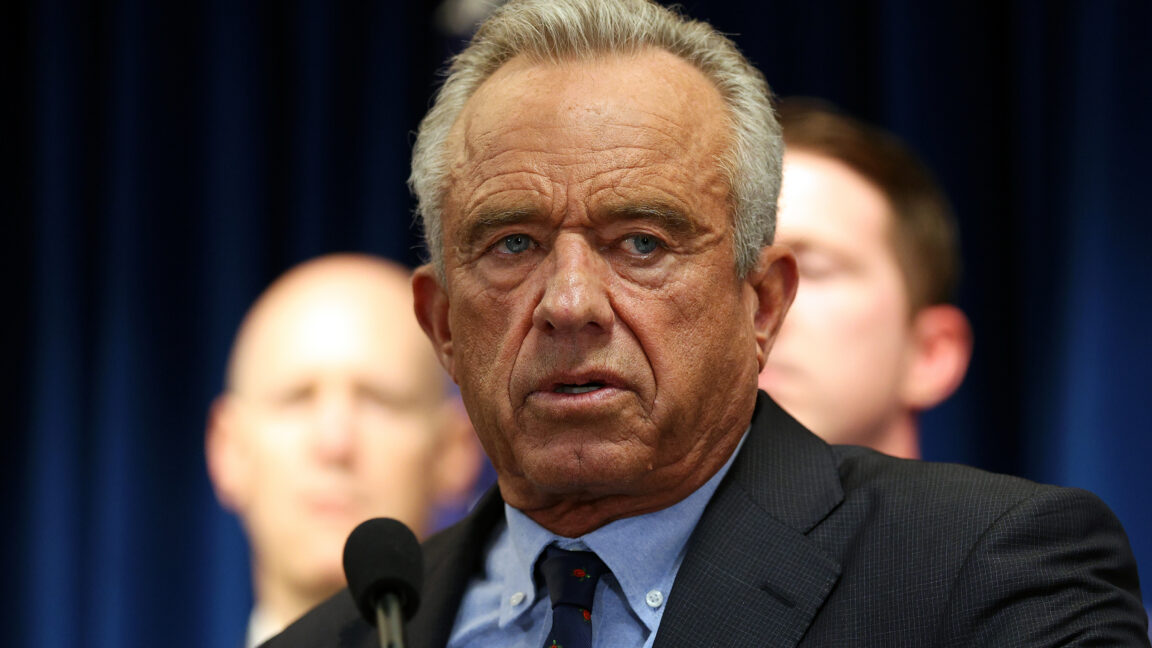
RFK Jr. melts down over NYT report, admits he blacklists reporters

1 Share

Anti-vaccine Health Secretary Robert F. Kennedy Jr. posted a long, enraged social media response to a New York Times article reporting that health department insiders think Kennedy is disengaged from the work of his sprawling agency. His response, however, seems to back the Times' claim.

The report, published Sunday, June 7, relied on accounts from a dozen people who have had direct contact with Kennedy during his time as health secretary. Collectively, the sources indicate that Kennedy has little interest in the details of the health department's work and little direct interaction with career staff. Kennedy misses critical, regularly scheduled meetings with agency leaders, is sometimes "checked out" in the meetings he attends, and has been out of the loop on key decisions, such as the firing of Tracy Beth Høeg, a political appointee elevated to top drug regulator at the Food and Drug Administration. In his stead, Kennedy often refers people to his protective, longtime assistant, Stefanie Spear, who colleagues say has slowed department operations and fueled some significant leadership departures.

On Wednesday night, Kennedy responded to the report with an 871-word diatribe on social media against the reporter, veteran journalist Sheryl Gay Stolberg, and the Times. His key argument was that much of the story could be refuted by a look at his jam-packed public calendar.

"All one needs to refute your argument is to glance at my publicly available calendar," he wrote in his opening paragraph. At another point, he elaborated, writing "Had you read my calendar, you would have seen that I have back-to-back meetings all day, every day, with both career and political staff..."

The problem with Kennedy's argument is that he does not have a publicly available calendar. This journalist is not aware of any such calendar. On Thursday, journalists at Stat News reported that Kennedy's public calendar was news to them, too. Over the past year, they have requested his calendar multiple times through the Department of Health and Human Services (HHS) press office and by filing Freedom of Information Act (FOIA) requests.

"Unwilling to talk to you"

"None of STAT’s FOIA requests have been completed, and some haven’t been acknowledged—despite HHS policy requiring a response with tracking and contact information within 10 days of submitting a request," the journalists wrote. "That includes three STAT inquiries from September 2025. The web page previously used to track requests has been taken down."

The outlet noted that it's not just journalists who are not able to get information from HHS; requests from citizens and lawmakers have also gone unanswered, though a leader of Kennedy's anti-vaccine group, Children's Health Defense, reportedly is getting his FOIA requests fulfilled, Stat noted.

Ars Technica has reached out to the HHS press office for comment as well as a link to the publicly available calendar. There was no immediate response. Stat reported that HHS did not respond to their comment requests in light of Kennedy's post.

That Kennedy seems to be under the false impression that his calendar is public adds to the argument that he is not in touch with the workings of his agency, backing the Times' report that Kennedy is disengaged.

Kennedy's unfamiliarity with his calendar's accessibility and the lack of information from HHS are also particularly striking, given that Kennedy came into the position touting plans for "radical transparency." In April 2025, he told reporters: "We’re restoring all the FOIA offices, and we’re going to make it much easier for people to get the information. We’re going to post as much as we can."

But Kennedy's social media outburst on Wednesday further made clear that Kennedy is not committed to transparency as health secretary. In it, he acknowledged that the HHS is withholding information from select journalists, in other words, blacklisting them.

"[S]ince we all are aware of your predictable bias, we at HHS are unwilling to talk to you about the topics that are important," Kennedy wrote of the Times. "The fact that you have minimal access to decision makers leaves you covering trivia and relying on your own capacity for invention."

Read full article

Comments


Read the whole story
Share this story
Delete
Next Page of Stories